
Last Updated: October 28, 2026
Quick Summary
Third-party tested supplements are checked by an independent lab against published standards for identity, potency, and contaminants like heavy metals. To verify quality, look for a seal from a recognized program such as NSF or USP, then confirm the exact product appears in that certifier's public database.
- Confirm the seal applies to the exact product and batch, since a brand can certify one item and not its whole line.
- NSF/ANSI 173 checks label accuracy, identity, contaminant limits, and the manufacturing facility.
- NSF Certified for Sport adds banned-substance screening, so athletes under anti-doping rules should look for that mark.
- USP Verified confirms identity, potency, purity, and performance, but it is not a guarantee of effectiveness.
- Ask brands for a certificate of analysis, and check seals in the certifier's listing before you buy.
Table of Contents
- What Third-Party Testing Means for Supplements
- Why Independent Supplement Testing Matters
- Supplement Brands With NSF Certification
- USP Verified Supplements and What the Mark Covers
- Informed Sport Certified Supplements for Strict Screening
- How to Check Supplement Quality Yourself
- Choosing a Tested Supplement Brand: Your Next Step
- Frequently Asked Questions
Third-party tested supplements carry a seal from an outside lab that checks what is actually inside the bottle, which is why shoppers look for them first. This guide explains how to verify quality for yourself and how the major certification programs differ.
Most people assume a "premium" label means the contents were checked. Often it doesn't. A certification mark is the clearest signal that an independent party tested the product, but only if you know what that mark covers.
What Third-Party Testing Means for Supplements
Third-party tested supplements are checked by an independent laboratory, separate from the brand that makes or sells the product, against published standards. The lab typically examines identity (is the listed ingredient really there), potency (is it present in the stated amount), and contaminants such as heavy metals or microbes.
The U.S. Department of Defense's Operation Supplement Safety guidance on third-party certification explains that certification is voluntary, and that the reliability of a seal depends on the standard behind it.
Product-level testing versus brand-wide testing
This distinction matters more than most shoppers realize. Product-level testing means a specific formula, in a specific batch, was sent to a lab. Brand-wide testing claims that a company tests its products, but the claim may not cover every item in its line.
When you read a seal, ask whether it applies to the exact product in your hand. A brand can be a good company and still have a single untested product in its catalog.
Why Independent Supplement Testing Matters
Supplements are regulated differently from prescription drugs. Manufacturers do not need to prove a product works before selling it, and independent checks fill part of that gap.
Independent testing matters for three reasons:
- Label accuracy: The bottle should contain what it lists, at the listed amount.
- Contamination control: Some products have been found to contain undeclared ingredients or contaminants.
- Consistency: A reliable product should perform the same batch to batch.
A 2021 study indexed by PubMed Central on consistency and contamination in herbal supplement products examined duplicate bottles of 29 herbal supplement products, which shows why researchers keep checking quality at the bottle level.
Supplement Brands With NSF Certification
NSF International is one of the most recognized independent certifiers in the supplement space, and its supplement program is tied to a published standard, NSF/ANSI 173, which is what makes the seal checkable rather than just decorative.
What NSF/ANSI 173 actually verifies
Under the standard, a certified product is checked for four things:
- Label claim accuracy, the ingredients listed are present at the stated amounts, and the panel matches the formula.
- Identity, the raw ingredient is what the label says it is, not a substitute or adulterant.
- Contaminant limits, heavy metals (lead, arsenic, cadmium, mercury), microbes, and other impurities must fall under published thresholds.
- Manufacturing facility audit, the plant that makes the product is inspected against good manufacturing practice requirements, not just the finished bottle.
That last point is the part shoppers miss. NSF certification is not only a lab test on a sample; it also covers the facility. A brand can pass a lab test and still fail a facility audit, which is why the mark carries more weight than an in-house "lab tested" claim.
NSF Certified for Sport is a different, stricter mark
NSF Certified for Sport uses the same base standard but adds screening for substances banned by major sports organizations (WADA, the NFL, MLB, and others). It also requires a stricter facility and supply-chain review. If you are subject to anti-doping rules, look for this mark specifically, the general NSF mark does not include the banned-substance screen.
How to verify an NSF claim
NSF publishes a public product listing database. To check a specific bottle:
- Go to the NSF certified products listing and search the exact product name.
- Confirm the listing matches the formula and size you are holding, a brand can have one certified SKU and many uncertified ones.
- Check whether the listing is current; certifications can lapse.
A common pattern is that a brand certifies its flagship product but not its full catalog. That is exactly why the product-level versus brand-wide distinction matters here.
Brands commonly seen with NSF certification
Rather than repeat a static list that goes stale, the practical approach is to treat the NSF public listing as the source of truth. Brands that have appeared with NSF certification in recent years include several large mainstream manufacturers, but certification status changes, so verify each product in the database rather than trusting a roundup, including this one. The NSF/ANSI 173 dietary supplement standard page and the NSF certified product database are the auditable sources to check.
For a broader view of how NSF compares with other programs, see the USP and Informed Sport sections below, each verifies a different scope, and the seal alone does not tell you which.
The table below sets out what each major certification program checks, so you can compare the scope of each seal.
| Program | Verifies | Best for |
|---|---|---|
| NSF Certified | Label accuracy, identity, contaminant limits, facility audit | General quality checks |
| NSF Certified for Sport | Same as NSF plus banned-substance screening | Athletes under anti-doping rules |
| USP Verified | Identity, potency, purity, performance, facility audit | General quality with ongoing audits |
| Informed Sport | Banned-substance screening | Athletes avoiding banned substances |
USP Verified Supplements and What the Mark Covers
The USP Verified mark is issued by the United States Pharmacopeia, an independent scientific nonprofit that publishes drug and supplement standards. It is one of the more widely recognized seals, but its scope is specific and worth understanding before you treat it as a blanket quality guarantee.
What USP verification actually checks
USP verification covers four published criteria:
- Identity, the ingredient is what the label declares.
- Potency, the ingredient is present within the declared amount and acceptable range.
- Purity, limits on heavy metals, microbes, and other contaminants are met.
- Performance, the product dissolves or releases as it should, which matters most for tablets and capsules.
USP also audits the manufacturing facility and reviews the brand's supply chain as part of verification. That is a meaningful difference from a one-off lab test: the mark reflects an ongoing program, not a single batch.
What USP verification does not mean
Be precise about scope. A USP Verified mark confirms the label and quality checks above. It does not mean the product is effective for any particular health goal, that it is appropriate for you, or that it is risk-free. Verification is a quality signal, not a medical endorsement.
It is also product-specific. A brand can carry the USP mark on one product and not on others in its line. When you see the mark, confirm it applies to the exact bottle in your hand.
How to verify a USP claim
USP maintains a public verified products listing. To check a bottle:
- Search the USP verified products database for the exact product name and manufacturer.
- Confirm the listing is current, verification is maintained through ongoing testing and audits, and products can drop out.
- Match the product form and size to what you are holding.
How USP compares with NSF and Informed Sport
Each program verifies a different scope, so the right seal depends on your goal:
- USP Verified, strong general quality check covering identity, potency, purity, performance, and facility audit. No dedicated banned-substance screen.
- NSF Certified, similar general quality scope under NSF/ANSI 173, with a facility audit.
- NSF Certified for Sport, adds banned-substance screening for athletes.
- Informed Sport, focused on banned-substance screening for athletes, with less emphasis on the full label-accuracy and facility-audit scope.
A product can carry more than one mark, and some do. When comparing, read the standard named on the seal rather than assuming all certification logos mean the same thing. The USP verified products listing is the auditable source for any USP claim.
A note on building your own list
Because certification status changes and is product-specific, the most reliable "list" is one you build and re-check: pick the products you actually take, look each one up in the certifier's public database, and note the date you checked. That is more auditable than any static roundup, including this article, and it is the habit that separates a verified purchase from a hopeful one.
Informed Sport Certified Supplements for Strict Screening
Informed Sport is a testing program aimed at athletes who must avoid banned substances. Its screening is designed to catch substances that could trigger a positive drug test, which makes it stricter than a general quality seal.
If you are subject to anti-doping rules, this certification is the one to prioritize. Everyone else can treat it as an extra layer of contaminant screening.
How to Check Supplement Quality Yourself
You do not need a lab to do basic verification. Start with the label and the manufacturer's disclosures.
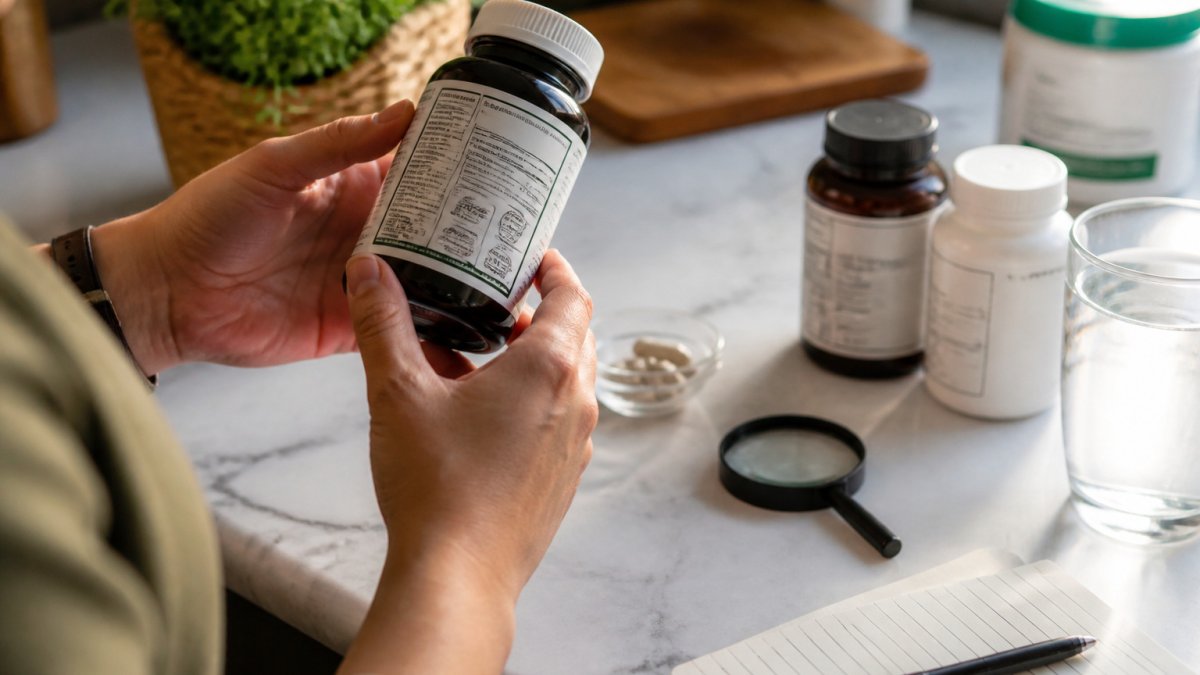
- Find the seal and identify the program. Confirm it names a specific standard.
- Check the product listing. Search the certifier's public database for the exact product name and lot.
- Read the ingredient panel. Look for full ingredient names and stated amounts, not vague "proprietary blends."
- Look for a certificate of analysis. Reputable brands can share batch testing results on request.
- Watch for red flags. Claims like "clinically proven" without citations, or large health promises with no testing details, deserve skepticism.
Some people notice digestive changes after starting a new product, and bloating is a common complaint with multivitamins. Stopping the product and speaking with a health professional is the sensible response if symptoms persist.
Choosing a Tested Supplement Brand: Your Next Step
Verification is only useful when you act on it. Once you know how to check quality, you can look at a complete multivitamin product designed for daily nutritional and immune support. Start by picking one product you already take and checking its seal against the steps above. If you are looking for another option, explore a magnesium product that supports muscle recovery, relaxation, and sleep. Then compare the standard it meets with the goals you care about most.
Frequently Asked Questions
What supplement brands are third-party tested?
Several independent programs test supplements, including NSF, USP and Informed Sport. Brands that carry these marks have had specific products evaluated by outside laboratories. Because programs differ in scope, check which products are covered rather than assuming the whole brand is tested. Verify each claim on the certifying organization's own listing before relying on it, and check the current status on the certifier's website since lists change over time.
How can I tell if a supplement has been third-party tested?
Look for a certification mark on the label, then confirm it through the certifying organization's searchable database using the product name or lot number. A logo alone is not proof, so treat a mark you cannot verify as unconfirmed. Also check whether the mark applies to that specific product or only to the company in general. The certifier's listing should name the exact product covered.
Does third-party testing prove that a supplement works?
No. Third-party testing checks what is in the product: whether the ingredients listed are present, whether potency is within a stated range, and whether contaminants such as heavy metals or microbes fall within set limits. It does not show that the product produces a health benefit. Evidence for effectiveness comes from clinical research on the specific ingredient and dose, which is a separate question from quality.
Is third-party testing the same as third-party certification?
Not exactly. Testing is the laboratory analysis of a sample. Certification is the program's decision, based on that testing and on audits of manufacturing practices, to allow a mark to appear on a product. Some programs test and certify, while others focus on one step. Knowing which applies helps you judge how much a mark actually covers.
Choosing a tested supplement is ultimately about confidence. Read the seal, confirm the product, and buy from brands that show their work.
